
Summer Migraines: How Heat, Travel, and Your Upper Neck Connect
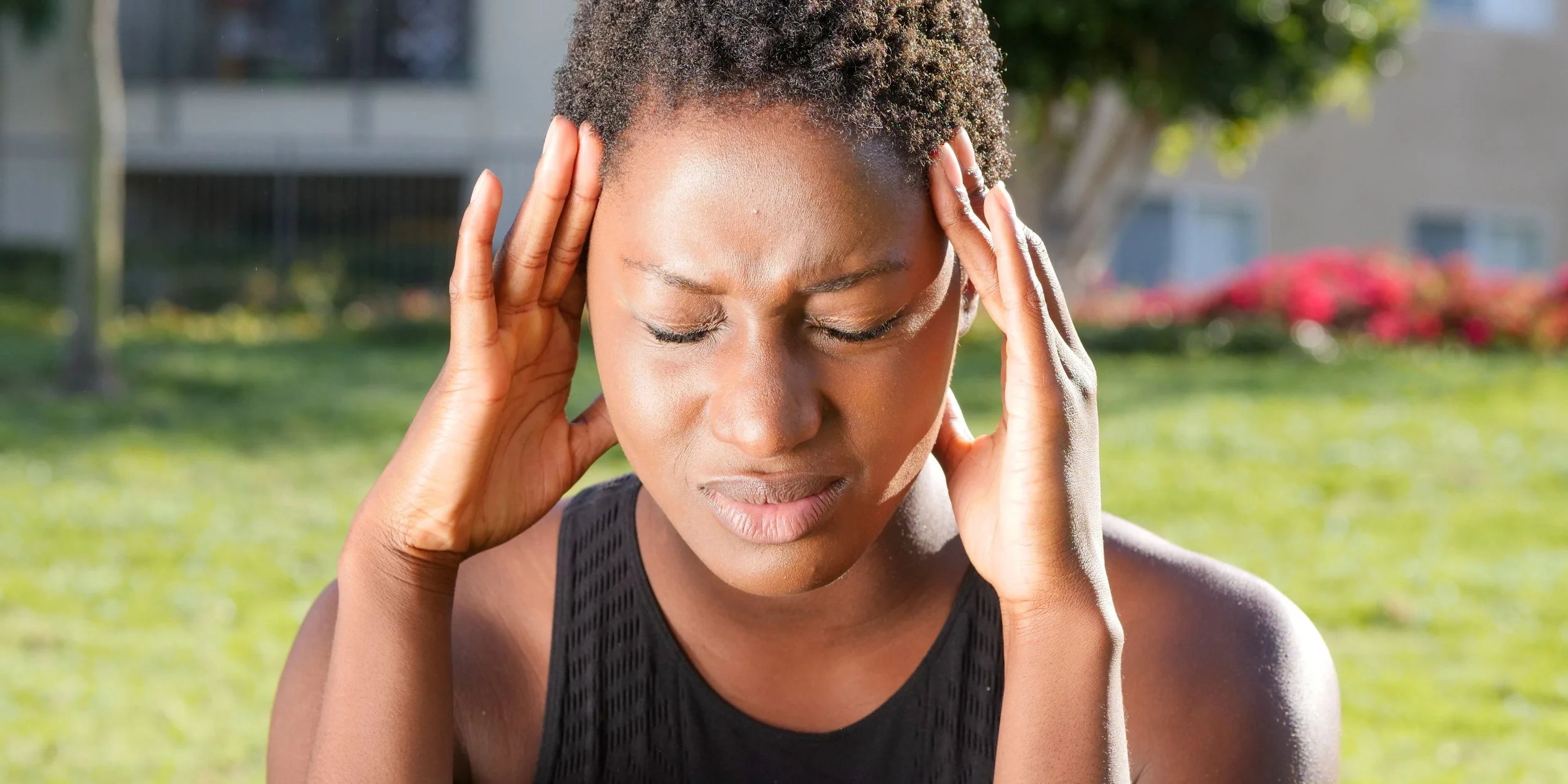
The migraines seem to find you in summer. A long drive in bright sun, a day on the lake, a disrupted sleep schedule, and by evening the familiar pressure is building behind your eyes. If your head feels worse in the warmer months, you are not imagining the pattern. Summer brings a cluster of common migraine triggers together, and for many people there is also a structural piece underneath that makes the threshold easier to cross.
Why Summer Can Be Hard On A Migraine Brain
People who experience migraines tend to have especially sensitive nervous systems. Several summer factors can lower the threshold at which an attack takes hold: dehydration, heat and sudden temperature swings, bright sunlight and glare, and the changes to sleep and routine that come with travel and vacation. Each can nudge a sensitive system closer to overflowing. These triggers are real, and worth managing with hydration, rest, and sun protection. But triggers are only half the story. The other half is why your system is sensitive in the first place.
The Neck Connection Most People Are Never Told About
Headache is a category, not a diagnosis. Tension-type, migraine, and cervicogenic headaches all work differently, and the upper neck is involved more often than patients realize. The upper cervical region houses the trigeminocervical nucleus, the place where nerve signals from the upper neck and from the trigeminal nerve, which serves the face and head, converge. When the atlas (C1) and axis (C2) are misaligned, that can contribute to referred head pain and may influence how easily a migraine is triggered. In other words, the summer heat may be the match, but upper cervical alignment can be part of how dry the kindling is.
How Upper Cervical Care Fits In
Upper cervical care does not chase the headache itself. It looks at whether a structural contributor in the C1 and C2 region is lowering your threshold. The approach is precise and measured, beginning with objective imaging and tracked through structured re-evaluations
rather than guesswork. This is why correcting upper cervical alignment is associated with changes in headache and migraine patterns for many patients. It does not replace your other migraine management. It addresses a piece that often goes unexamined.
Is This Worth Looking Into For You?
Consider an evaluation if you recognize yourself here:
• Migraines or headaches that worsen in summer despite managing your usual triggers
• Pain that often starts at the base of the skull or behind the eyes
• Headaches that worsen with neck movement
• A history of head or neck injury, even years ago
• Medications that used to work and no longer do as well
Summer is a good time to ask a different question. Not only what is triggering this, but “why is my system so ready to react?”

Ready to find out if upper cervical care is a fit for you?
Dr. Amanthi Demuth, Dr. Tiffany England, and the team at Demuth Spinal Care and Concussion Center in Sartell, MN are available for new patient consultations. You can book online in just a few minutes.
Prefer to learn more first? Click here.
Medical Disclaimer
This article is provided for educational purposes only and is not intended to diagnose, treat, or replace individual medical advice. If you are experiencing persistent headaches, dizziness, neck pain, or symptoms following a concussion or injury, please consult a qualified healthcare provider. Individual results with upper cervical care vary. Demuth Spinal Care and Concussion Center evaluates each patient to determine whether care is appropriate for their specific situation.