
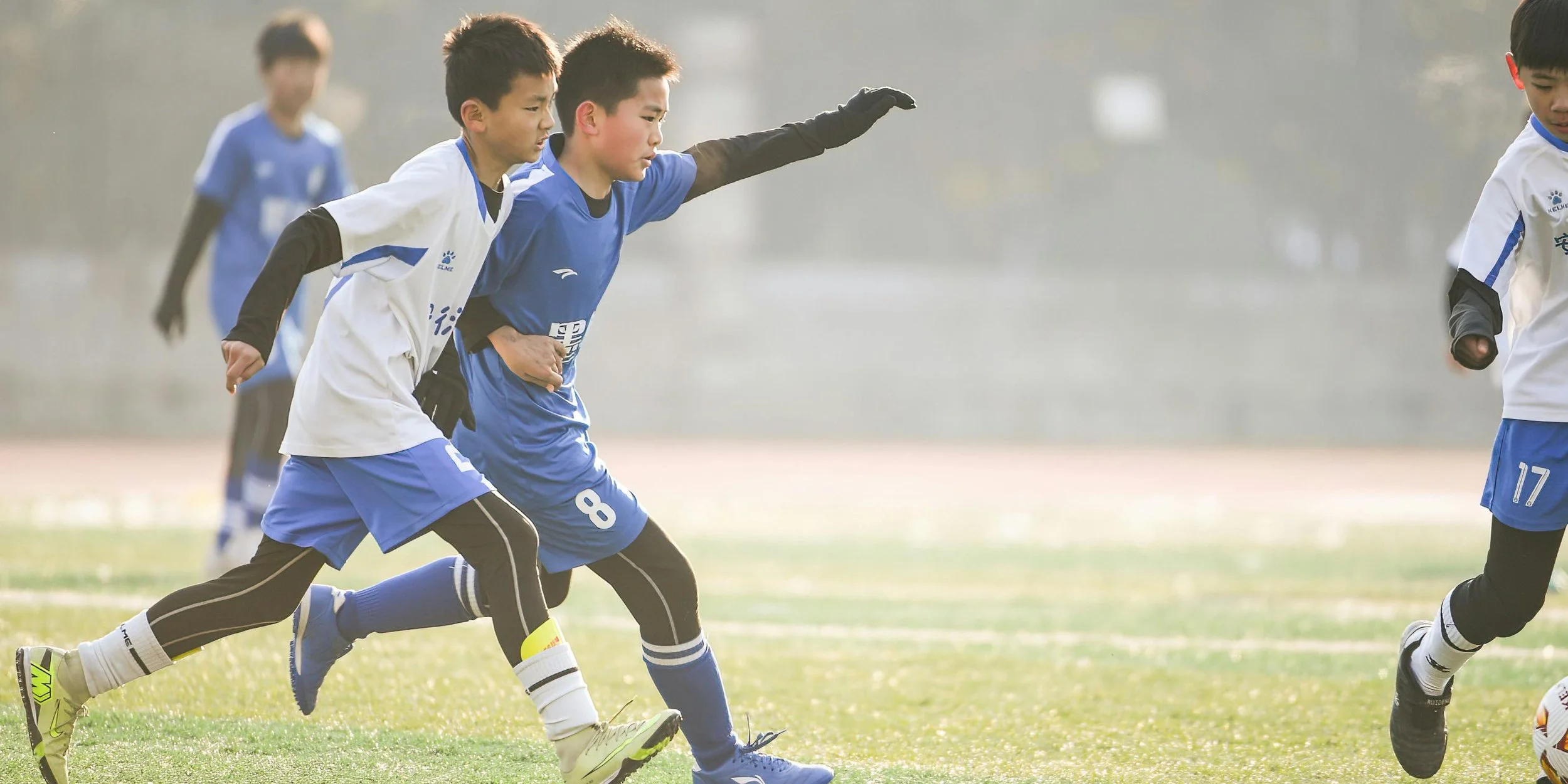
Football, soccer, and hockey are back, and so are the collisions that come with them. Most coaches and parents are now trained to watch for concussions, which is real progress. There is a second injury, though, that rarely makes the checklist. When an athlete takes a hit, the brain gets the attention it deserves. The neck, which absorbed the same force, is often left out of the conversation entirely.
Recognizing a concussion on the sideline
A concussion does not require losing consciousness, and it does not require a direct blow to the head. Watch for headache, confusion or feeling dazed, dizziness, balance problems, nausea, sensitivity to light or sound, and changes in mood, sleep, or behavior. When in doubt, the athlete sits out. That single decision protects a developing brain more than anything else. Any suspected concussion should be evaluated, and return to play should follow proper guidance rather than how the athlete says they feel.
The neck injury that comes with the hit
The force that moves the head enough to cause a concussion is absorbed by the cervical spine. The atlas (C1) and axis (C2) sit directly below the brainstem, and when their position is disturbed, the effects can include headaches, dizziness, difficulty concentrating, and disrupted sleep. These overlap almost perfectly with concussion symptoms, which is exactly why the neck component is so easy to miss. When a young athlete is slow to recover, undetected upper cervical involvement is frequently part of the picture.
Why this is our focus
This practice is built around the upper cervical region and concussion recovery, supported by objective imaging and measured re-evaluation. That combination is well suited to the neck component that other settings are not always equipped to evaluate. It works alongside the standard concussion protocol, not in place of it.
What to watch for this season
• Know the signs of concussion before the first game
• Take any suspected hit seriously and follow removal-from-play guidance
• Track symptoms in the days after a hit, not just the moment of injury
• Look closer if recovery stalls or symptoms linger
• Remember that athletes often downplay how they feel
A safe season starts with knowing what to look for, including the injury that does not always announce itself.
Ready To Find out If Upper Cervical Care Is A Fit For You?
Dr. Amanthi Demuth, Dr. Tiffany England, and the team at Demuth Spinal Care and Concussion Center in Sartell, MN are available for new patient consultations. You can book online in just a few minutes.
Prefer to learn more about upper cervical care first? Click here.
Medical Disclaimer
This article is provided for educational purposes only and is not intended to diagnose, treat, or replace individual medical advice. If you are experiencing persistent headaches, dizziness, neck pain, or symptoms following a concussion or injury, please consult a qualified healthcare provider. Individual results with upper cervical care vary. Demuth Spinal Care and Concussion Center evaluates each patient to determine whether care is appropriate for their specific situation.